
Introduction
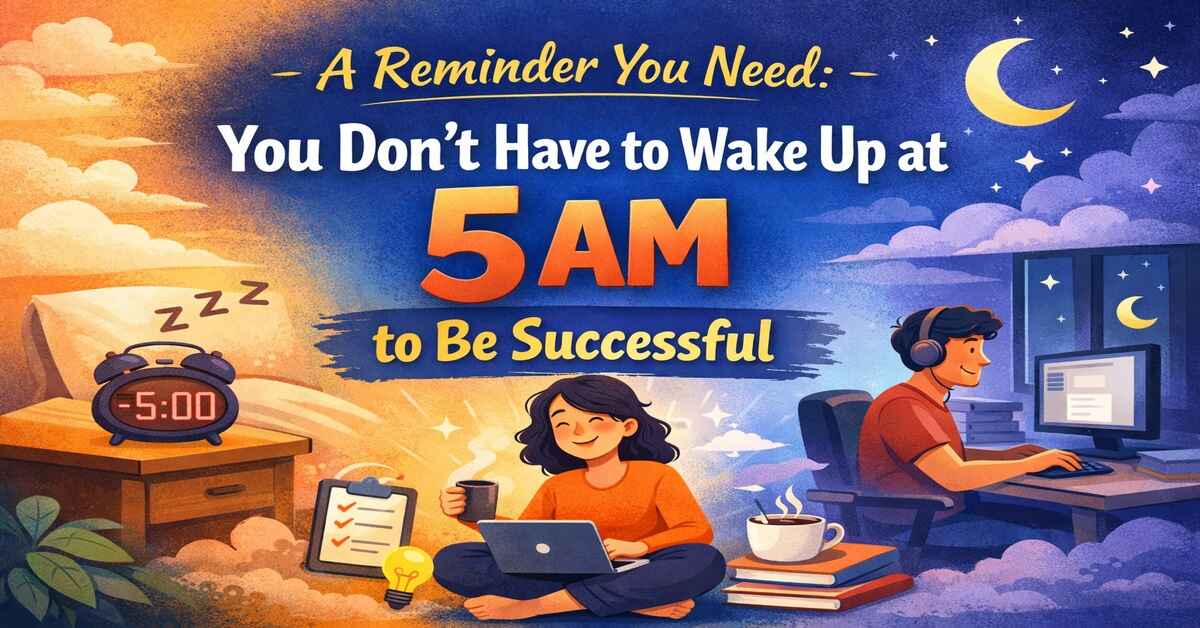
Is waking up at 5am necessary for success? Not really, and this article explains why.
You set your alarm for 4:50 AM. Again.
Tomorrow will be different, you tell yourself. Tomorrow, you’ll finally join the 5 AM club. You’ll meditate, journal, exercise, and get a head start on your day, just like all those successful entrepreneurs on Instagram.
But when the alarm screams at you in the darkness, you hit snooze. Then you feel guilty. “If I can’t even stay committed to waking up early, how will I ever be successful?”
Here’s the truth nobody’s telling you: The 5 AM club myth is one of the biggest productivity lies sold to aspiring entrepreneurs in the form of productivity tips and tricks.
And today, we’re breaking it down.
What Is the 5 AM Club (And Why Everyone’s Obsessed With It)
The 5AM club concept exploded after Robin Sharma’s book promised that waking up at 5am for success was the secret formula used by billionaires, CEOs, and world-changers.
The idea is simple: Wake up at 5 AM, follow the 20/20/20 rule (20 minutes of exercise, 20 minutes of reflection, 20 minutes of learning), and you’ll unlock superhuman productivity.
Sounds amazing, right?
Except there’s a problem.
It assumes everyone’s brain works the same way. It assumes your body clock, your responsibilities, your mental health, and your life circumstances are identical to a Silicon Valley CEO’s.
Spoiler alert: They’re not.
Do Successful Entrepreneurs Really Wake Up at 5AM(And Is Waking Up at 5AM Necessary)??
Let’s look at some facts.
Yes, some successful people wake up early. Tim Cook (Apple CEO) reportedly wakes up at 3:45 AM. Michelle Obama has said she works out at 4:30 AM.
But here’s what the motivational Instagram posts won’t tell you:
- Elon Musk has admitted to sleeping until 7 AM and says he needs 6 hours minimum to function.
- Mark Zuckerberg doesn’t follow a strict wake-up time and has said he wakes up whenever he feels rested.
- Aaron Levie (Box CEO) is a self-proclaimed night owl who does his best work late at night.
- Alexis Ohanian (Reddit co-founder) has spoken about the importance of sleep over rigid schedules.
The pattern is simple: successful entrepreneurs follow a routine that suits their body and energy, not what looks good in motivational quotes.
The Science Behind Morning Routines (And Why 5 AM Isn’t Magic)
Here’s what research actually says about sleep and productivity:
Your Natural Body Clock Matters More Than Your Alarm
Science recognizes different “chronotypes”, your body’s natural sleep-wake preference. Some people are larks (morning people), others are night owls, and many fall somewhere in between.
A 2019 study found that forcing night owls to wake up early actually decreases their cognitive performance, mood, and overall productivity.
Translation: If you’re naturally a night owl, waking up at 5 AM might be making you less successful, not more.
Sleep Quality Beats Wake-Up Time
The National Sleep Foundation recommends 7-9 hours of sleep for adults. Consistently getting less than that, just to wake up early, leads to:
- Impaired decision-making
- Reduced creativity
- Increased stress and anxiety
- Higher risk of burnout
You can’t be productive if you’re not getting enough sleep.
Why the 5AM Club Myth Is Actually Harmful
Let’s talk about the real damage this myth does.
1. It Creates Toxic Productivity Culture
When you believe that successful people wake up at 5 AM, you start measuring your worth by your alarm clock. You feel like a failure before your day even begins.
This is especially tough for beginners and new entrepreneurs who already doubt themselves.
2. It Ignores Your Actual Life Circumstances
Not everyone has the luxury of controlling their schedule:
- Parents with young children who wake up at night
- People working night shifts or multiple jobs
- Individuals managing chronic illness or mental health conditions
- Anyone living in a different time zone from their clients
So when someone says “just wake up earlier,” it feels like they don’t understand your real life at all.
3. It Distracts From What Actually Matters
Productivity isn’t about when you wake up. It’s about:
- Focus and deep work blocks (whenever they happen)
- Energy management (working when you’re most alert)
- Consistency in habits (not clock times)
- Strategic priorities (doing the right things, not all the things)
What Successful Entrepreneurs Actually Do Instead
Here’s what productivity research and real entrepreneur habits reveal:
They work during their best energy hours, instead of forcing a fixed schedule.
The best morning routine for entrepreneurs isn’t about the hour; it’s about the intention.
Some successful habits include:
- Protecting your peak energy hours for your most important work
- Creating a consistent wake-up time (whether that’s 5 AM or 9 AM)
- Starting the day with intention (not immediately checking email)
- Building in transition rituals between sleep and work mode
They Prioritize Sleep as a Competitive Advantage
eff Bezos has said he prioritizes 8 hours of sleep because it makes him a better decision-maker. Arianna Huffington built a company around sleep wellness after collapsing from exhaustion.
Sleep isn’t lazy. It’s strategic, and most importantly, it is important.
They know the best wake-up time is different for everyone.
Some entrepreneurs do their best work early in the morning. Others do their best work late at night.
How to Be Productive Without Waking Up Early
If you’re a night owl or just can’t make early mornings work, here’s your alternative productivity routine:
For Night Owls:
- Embrace your natural rhythm – Schedule deep work during your peak hours (even if that’s 9 PM)
- Create a night owl productivity routine – Set boundaries so late-night work doesn’t bleed into unhealthy patterns
- Use mornings for small tasks – like emails and simple work—when your energy is low.
- Protect your sleep – Maintain a consistent bedtime, even if it’s 2 AM
For Anyone Struggling With Consistency:
Instead of forcing a 5 AM wake-up, try these productivity habits for beginners:
- The 10-minute rule: Start with 10 minutes of focused work on your top priority
- Time blocking: Schedule specific hours for specific tasks (regardless of when they are)
- Energy tracking: Notice when you’re most alert and protect those hours fiercely
- Habit stacking: Attach new habits to existing routines, not arbitrary times
So if you’re wondering, “Is waking up at 5am necessary,” the real answer is: only if it helps your energy and consistency.
How to Wake Up Early (If You Really Want To)
If you genuinely want to try early mornings, here’s the science-backed way:
- Shift gradually – Move your wake-up time by 15 minutes every few days
- Get morning sunlight – Helps reset your circadian rhythm
- Set a consistent bedtime – You can’t wake up early if you’re sleep-deprived
- Have a compelling reason – “Because successful people do it” isn’t enough
- Give it 30 days – Your body needs time to adjust
But if it still feels terrible after a month? It might just not be for you. And that’s okay.
The Real Habits of Successful Entrepreneurs
After researching hundreds of entrepreneurs, here’s what actually matters:
✅ Intentional morning routines (at whatever time works for you)
✅ Consistent sleep schedules (same bedtime and wake time)
✅ Protected focus time (deep work without interruptions)
✅ Regular movement (exercise that fits your schedule)
✅ Deliberate recovery (rest isn’t optional)
Notice what’s missing? A specific wake-up time.
If you want another real example of success habits and smart systems, read my breakdown of Zomato’s marketing strategy and why their campaigns keep going viral.
A Reminder You Need
You don’t need to wake up at 5 AM to be successful.
You don’t need to follow the 5am club 20/20/20 rule if it doesn’t fit your life.
You don’t need to force yourself into someone else’s routine to prove your dedication.
What you need is a system that works for your brain, your body, and your life.
Because the most successful entrepreneur’s daily routine isn’t found in a book, it’s the one you can actually sustain.
Key Takeaways
- The 5AM club myth assumes everyone’s biology and circumstances are identical, they’re not
- Successful entrepreneurs prioritize sleep quality and energy management over specific wake-up times
- Your chronotype (natural sleep-wake preference) matters more than motivational quotes
- Forcing yourself to wake early as a night owl can actually decrease productivity and increase burnout
- The best morning routine is one built around your peak energy hours, not arbitrary clock times
- Consistency and intentionality matter more than the hour on your alarm clock
- You can build successful habits without sacrificing sleep or fighting your natural rhythm
FAQ
Q1: Is the 5AM club actually backed by science?
No. While some research shows benefits of morning routines, there’s no scientific evidence that 5 AM specifically is optimal. Sleep science emphasizes individual chronotypes and quality over specific wake-up times.
Q2: Can night owls be as successful as early risers?
Absolutely. Many successful entrepreneurs and creatives are night owls. Research shows night owls often excel at creative problem-solving. Success comes from working with your natural rhythm, not against it.
Q3: How do I know if I should wake up early or not?
Track your energy levels for 2 weeks. When do you feel most focused and creative? If it’s morning, lean into it. If it’s evening, structure your day accordingly. Your natural peak performance time is your answer.
Q4: What’s the best time to wake up for productivity?
The best time is when you’ve had 7-9 hours of quality sleep and can maintain consistency. For some that’s 5 AM, for others it’s 8 AM. Consistency matters more than the specific hour.
Q5: How can I be productive without waking up at 5 AM?
Focus on: protecting your peak energy hours for deep work, maintaining consistent sleep schedules, time-blocking important tasks, minimizing distractions during focus time, and building sustainable daily habits, regardless of when they happen.
Q6: Does waking up at 5 AM guarantee success?
No. Waking up early doesn’t cause success—having focused work habits, strategic priorities, and consistent execution does. Many successful people wake up late and still build thriving businesses.







1 thought on “The 5 AM Club Myth: Do Successful Entrepreneurs Really Wake Up at 5AM?”