
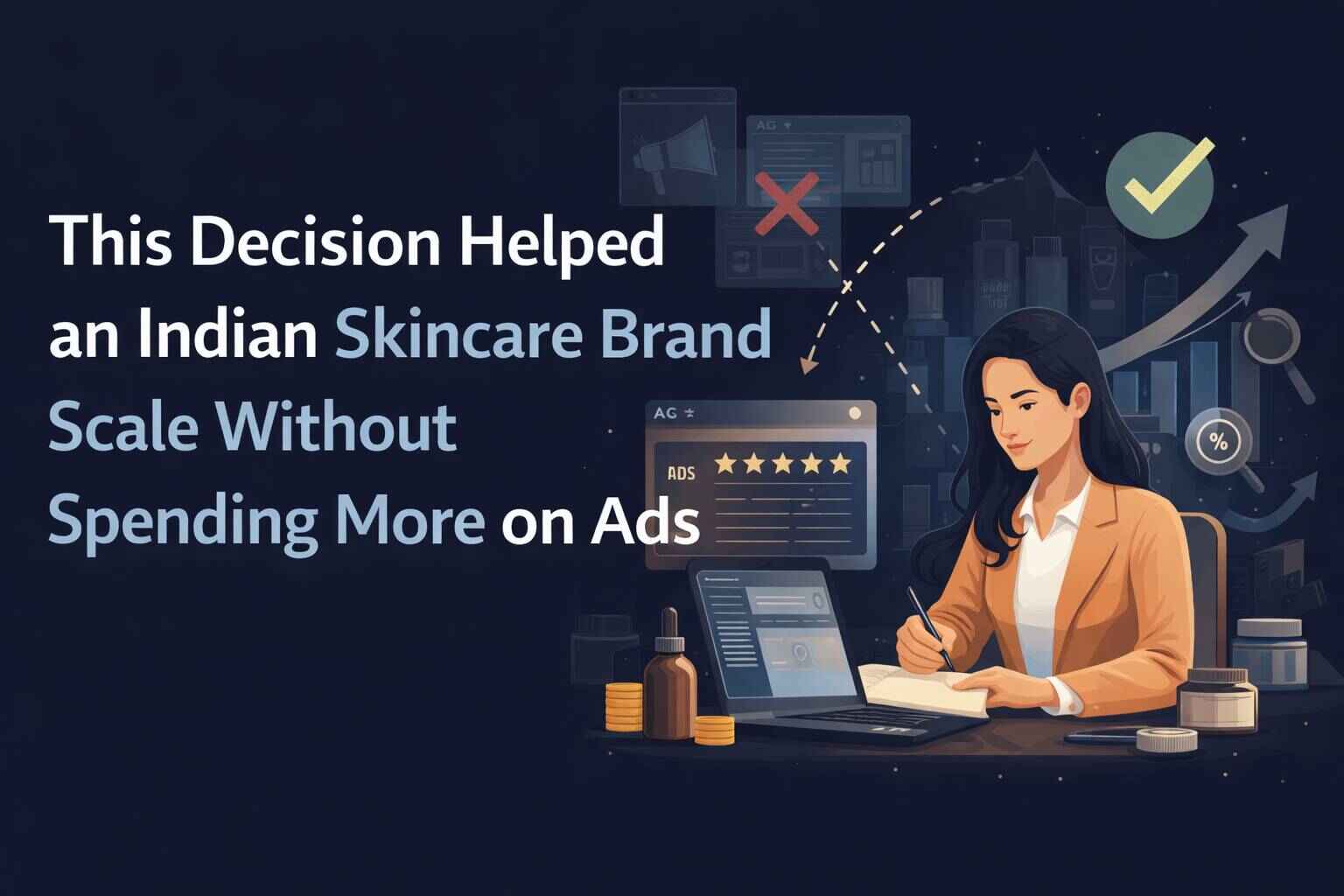
Priya Sharma was three months away from shutting down her skincare brand.
Not because the product was bad. Not because she wasn’t trying hard enough. But because she was watching thousands of rupees disappear into Facebook ads every month while sales barely moved.
Everyone kept telling her the same thing: “Scale your ads. Increase your budget. Test new creatives. Change your target audience.”
So she did the same. Borrowed money. Hired designers. Increased her daily spend.
Traffic went up. But sales didn’t.
That’s when she made a decision that felt like giving up: She paused all her ads for an entire month.
What happened next changed everything, and it had nothing to do with advertising.
The Problem Hiding in Plain Sight
Clarity about what you sell and who you sell it to completes nearly 40% of the business battle
Priya ran PureRoots Naturals, a small skincare brand focused on sensitive Indian skin. Her website looked professional. Her products were good. Her ads were reaching people.
But when someone clicked her ad and landed on her homepage, they saw this:
“Premium Ayurvedic skincare products made with love and natural ingredients. Chemical-free, organic, and gentle on your skin. Shop now and get 20% off!”
Sounds fine, right?
But it tells you nothing.
Who is this for? What problem does it solve? Why should I trust a random brand I’ve never heard of? What makes it different from every other “natural” brand?
The homepage had:
- Beautiful product photos
- A big discount banner
- An “Add to Cart” button
But it didn’t answer the one question screaming in every visitor’s head: “Why should I care? Is it really for me or for my skin problems?”
What She Did Instead of Spending More on Ads. The decision that changed everything
In October, Priya did something that every small brand owner should do. She stopped trying to get more customers and started understanding the few customers she already had.
She messaged everyone who’d bought from her. Not with a survey form, but real conversations on WhatsApp.
She asked three simple questions:
1. What almost stopped you from buying?
2. What finally made you decide to buy?
3. What worried you most before ordering?
What Her Customers Actually Said
The answers were eye-opening:
Neha from Jaipur: “I bookmarked your site for two weeks. I kept thinking, ‘What if this causes a reaction?’ I finally bought because of that Instagram story where you showed your ingredient sourcing.”
Anjali from Pune: “Your product page said ‘natural’ and ‘organic’ a hundred times, but I couldn’t figure out what it actually does. I bought it because your customer service explained it clearly on WhatsApp.”
Rohit (buying for his wife): “I was comparing you with three other brands. Everyone said the same generic stuff. I chose you because of your blog post about reading skincare labels, which made me trust that you actually know your stuff.”
The pattern was clear.
People didn’t need lower prices. They didn’t need fancier packaging. They needed to trust her before they’d consider buying.
And her website wasn’t building that trust; it was just pushing sales.
The Three Changes That Actually Worked
Priya spent two weeks rebuilding her website’s foundation. Not the design or the photos. Just the message.
Change #1: She Got Specific About the Problem
Instead of trying to appeal to everyone, she spoke directly to one type of customer.
Before: “Premium Ayurvedic Skincare Products”
After: “Skincare for Sensitive Indian Skin, No Reactions, No Regrets”
One line below that: “If you’ve had bad reactions to ‘organic’ brands before, this is why we’re different.”
Although the change was small, the impact wasn’t.
Suddenly, people who’d had bad experiences with “natural” products felt seen. They stopped scrolling and started reading.
Change #2: She Showed Everything (Yes, Really)
Instead of hiding behind vague promises about “premium ingredients,” she created one detailed page showing:
- Photos of her sourcing ingredients from specific Kerala suppliers
- Lab test certificates that people could actually download
- Her kitchen workspace where batches were made
- A video explaining why she started this after a chemical burn from a “famous” brand
- Her WhatsApp number with a promise: “Text me if you’re unsure”
Was she scared competitors would steal her process? Absolutely.
Did she do it anyway? Yes.
Because she realized people weren’t choosing between her and competitors. They were choosing between her and doing nothing.
Trust was more valuable than secrets.
Change #3: She Stopped Selling and Started Creating Educational Content
Before turning ads back on, Priya wrote one blog post:
“5 Questions to Ask Before Buying Any Natural Skincare Product (From Someone Who Made All the Mistakes)”
Here’s what made it work:
What she included:
- How to spot fake “organic” certifications
- Why “chemical-free” is actually a marketing lie
- Ingredients that work for Indian skin types
- Red flags most brands hide
What she didn’t include:
- Product mentions in the first 80% of the article
- Aggressive calls to action
- Discount codes
- Sales pitches
Only at the very end: “If you’re looking for products made with these principles, that’s what we do.”
That post got shared hundreds of times. More importantly, people read it before visiting her product pages. They arrived already trusting her expertise.
Why This Worked (The Real Reason)
Here’s the uncomfortable truth about ads: They’re an amplifier, not a solution.
If your message is unclear → Ads amplify the confusion
If trust is missing → Ads amplify the doubt
If your positioning is weak → Ads just waste money faster
Priya didn’t grow because she stopped advertising. She grew because she stopped using ads to cover up fundamental problems.
Most small businesses are in the same trap:
- Spending money to drive traffic
- To websites that don’t convert
- Then blaming the ads, the algorithm, or the market
But the real issue? Asking strangers to trust you before giving them a reason to.
The Pattern I Keep Seeing
Priya’s story isn’t unique. I’ve watched the same pattern across dozens of businesses:
The common thread? They all stopped scaling before they simplified. They fixed their foundation before spending more money amplifying a broken message.
What Most Businesses Get Wrong
Growth feels exciting. Fixing foundations feels boring.
Running ads feels like progress. Clarifying your message feels like procrastination.
So businesses choose excitement:
- Chase visibility before earning trust
- Scale before they stabilize
- Spend before they simplify
I get it. When revenue is flat, doing nothing feels irresponsible. Any action feels better than sitting still.
But motion without direction is just expensive activity.
What You Can Do About This
If you’re spending on ads without seeing results, ask yourself these questions:
1. The 10-Second Test
Can someone who’s never heard of you understand what you do in 10 seconds?
Not your elevator pitch. Your actual website headline.
If it’s generic (“Quality products at affordable prices”) or vague (“Solutions for modern businesses”), that’s your problem.
2. The Doubt Question
What’s the #1 doubt stopping people from buying? And does your website clearly address it?
For Priya, it was: “How do I know this won’t cause a reaction?”
What’s yours? Where do you answer it?
3. The Trust Check
Look at your homepage. Is it immediately pushing “Buy Now” buttons?
Or is it giving people a reason to believe you first?
Trust isn’t built with testimonial badges. It’s built by showing you understand their problem and have a credible solution.
4. The Knowledge Gap
What would a customer need to know to feel confident buying from you?
Make a list. Then check if that information is actually on your website clearly and findably.
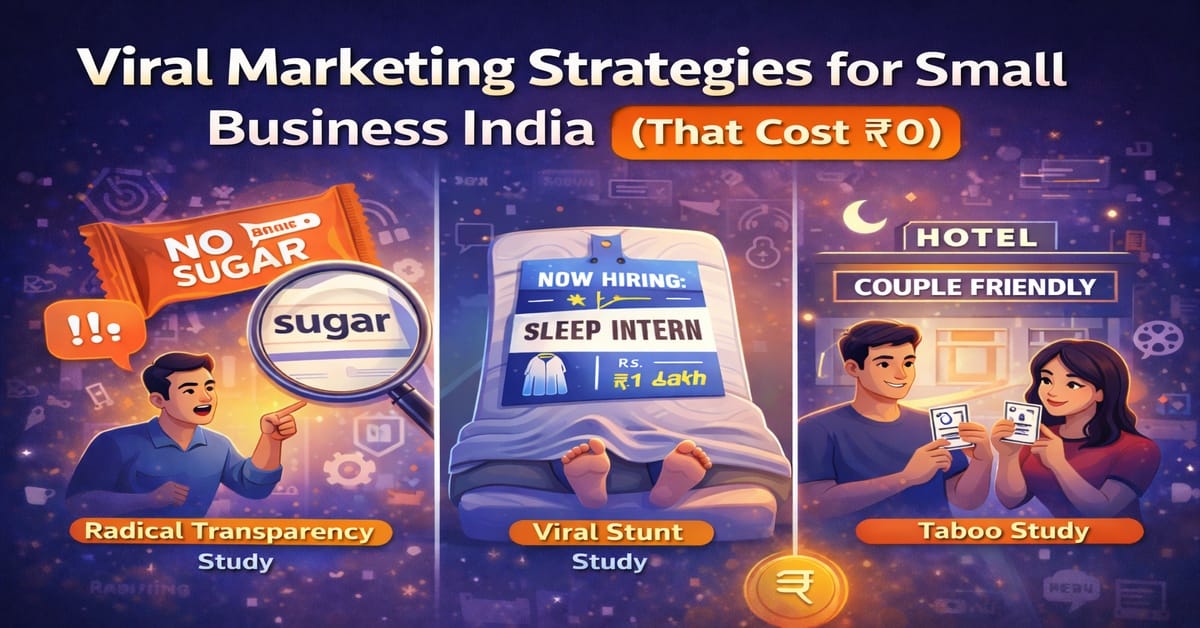
Sometimes, smart marketing can outperform big budgets. These Indian brands went viral without spending a penny on ads — see how.
Your Action Plan This Week
Day 1-2: Talk to Your Customers
Message 10 people who bought from you. Real conversations, not surveys.
Ask:
- What almost stopped you from buying?
- What finally made you decide?
- What questions didn’t my website answer?
Day 3-4: The 10-Second Test
Open your homepage in incognito. Give yourself 10 seconds.
Can you understand what you sell, who it’s for, and why it matters? If not, that’s your problem.
Day 5-6: Create One Piece of Trust-Building Content
Based on customer feedback, address their biggest doubt. A blog post, video, or transparency page, whatever fits your business.
Day 7: Simplify Your Message
Rewrite your headline to be specific, not generic.
❌ “Premium products for everyone”
✅ “This solves [specific problem] for [specific person]”
Then test your improved site with your existing ad budget before scaling.
Gain clarity of the business you are in. Get clear on what you sell, to whom you sell, and why you sell.
“Priya’s story is representative of patterns seen across many small brands.”




2 thoughts on “This One Business Decision Helped a Small Indian Brand Scale Faster Than Ads”